Fundraising infrastructure for organizations that can’t afford gaps.
One system of record for donors and households, appeals and direct mail, events, gifts, receipts, and follow-up — built for the way serious fundraising teams actually work.
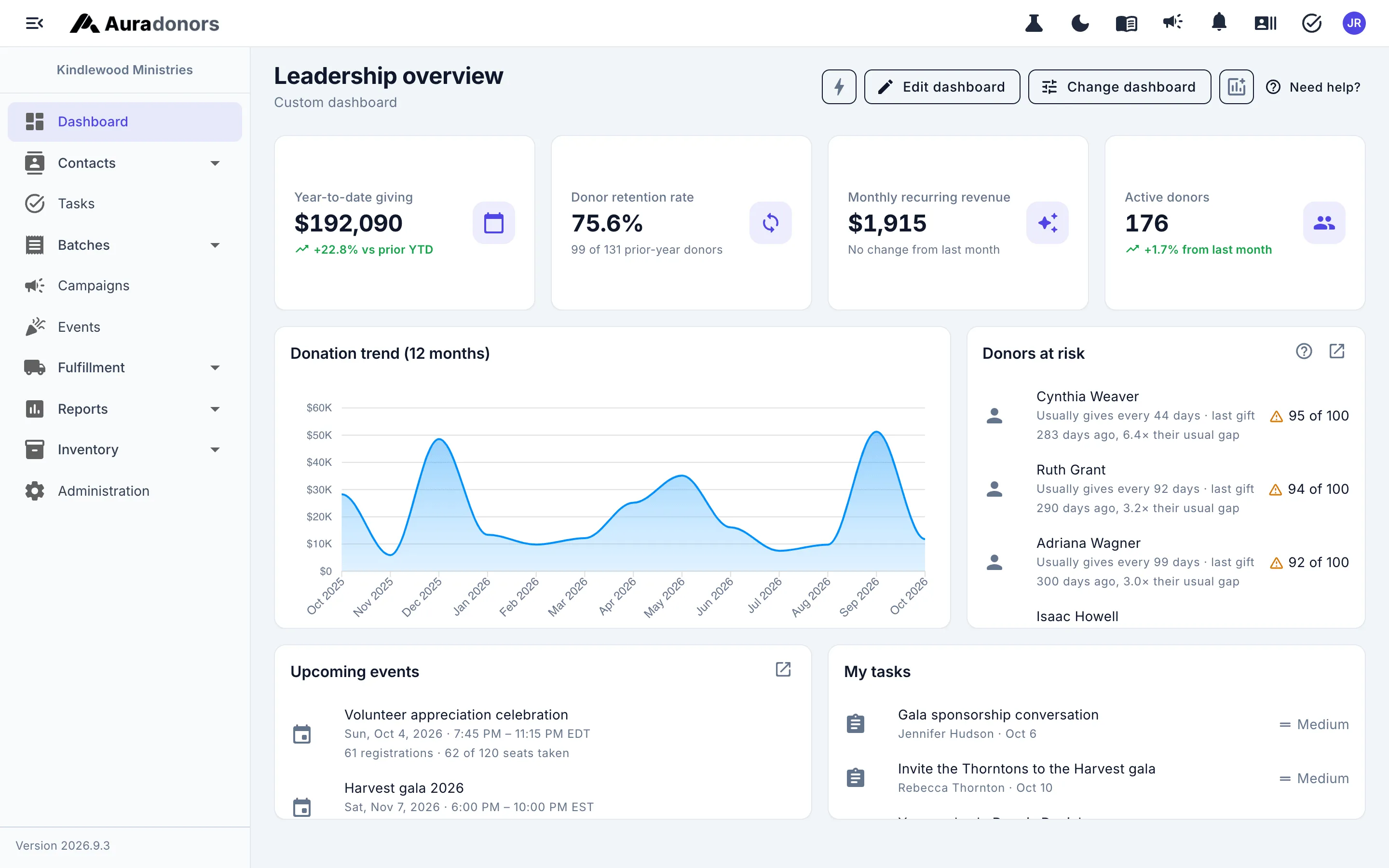
What happens when a gift comes in.
One workflow, one record, one source of truth — without spreadsheets in the middle.
- 1
Gift received
By mail, phone, event registration, or recurring charge — captured the same way, with its appeal code.
- 2
Credited where it belongs
To the right funds, the appeal that raised it, and today’s batch — split if needed.
- 3
Thanked in your words
A receipt or thank-you email goes out by your rules, or waits for review.
- 4
Donor and household updated
Giving history, household totals, and engagement move with the gift.
- 5
Follow-up created
When a rule calls for a call or a card, the task is created and lands in front of the people who hand out the work.
- 6
Ready for reporting
The batch reconciles, the dashboards move, and January’s statement is already right.
Your team is working hard. Your systems are holding them back.
A major donor gives a significant gift. The thank-you call happens three weeks late — or not at all — because the task was never assigned. The donor notices.
The fall appeal goes out. Six weeks later nobody can say what it raised, because half the replies came back without a code and the mail list lived in a spreadsheet.
A board member asks for your donor retention rate. Your development director spends two days reconciling three systems, then presents with low confidence.
These are operational problems, not technology problems — and they cost your organization donors, dollars, and credibility every month they go unresolved.
Organizations where fundraising is a core operation — not a side project.
Ministries, rescue missions, broadcast-funded organizations, and nonprofits with dedicated development teams — organizations that raise money through the mail, on the air, and in the room, with multiple funds, board-level reporting, and operational complexity that outgrew spreadsheets and entry-level CRMs years ago. If your team is large enough to need structure and your mission is important enough to demand accountability, this platform was built for you.
Everything your fundraising operation runs on, in one system.
Each part works on the same donor record, so a gift, a mailing, an event, and a follow-up are never four separate stories.
Donors & households
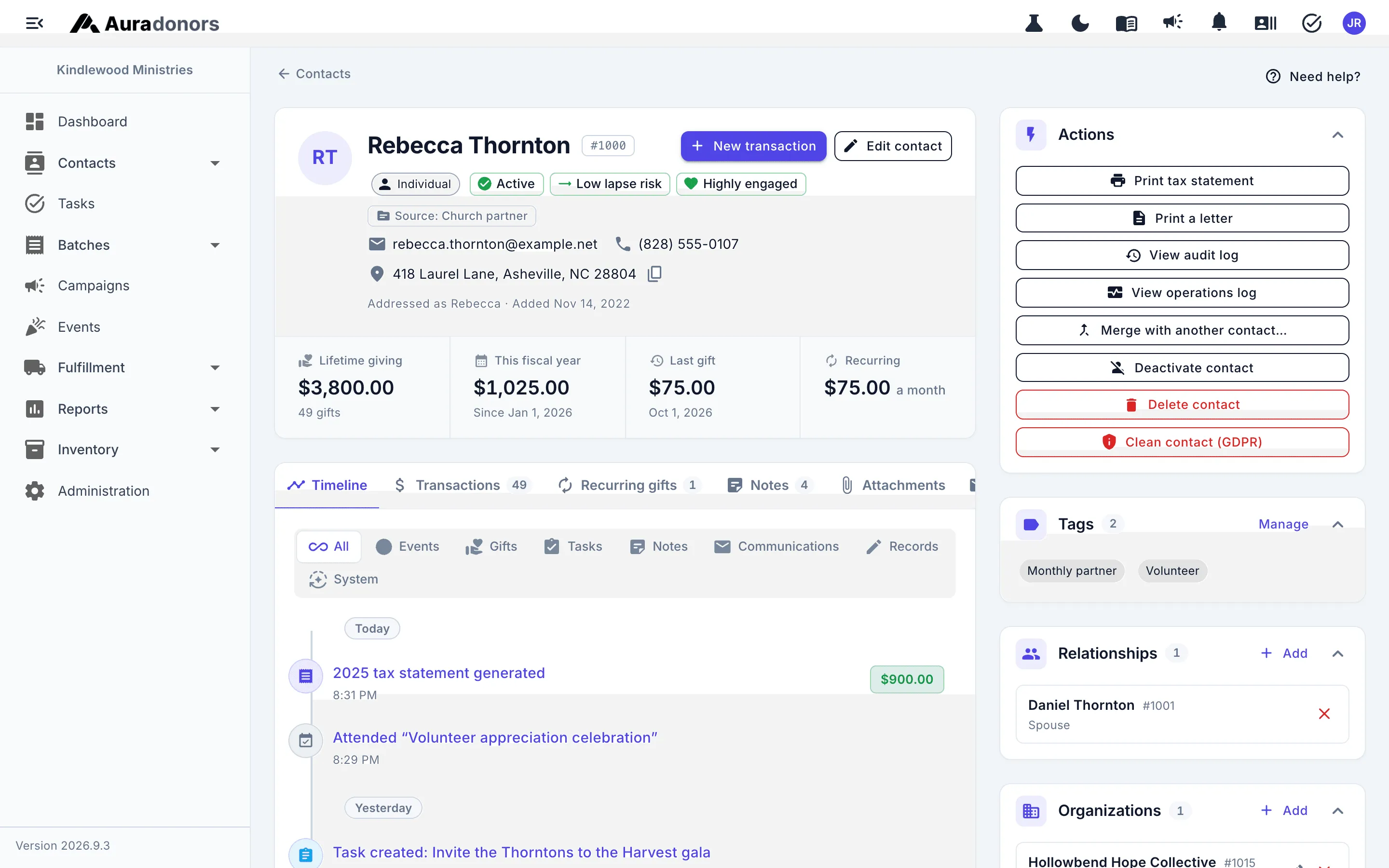
Profiles, households, relationships, and clean addresses — one record your whole team trusts.
Learn moreDonor insights
Lapse-risk and engagement scores on every donor, with their working shown — plus RFM, lifecycle, and retention.
Learn moreTasks & automation
Owned, deadlined follow-up — and rules that send the thank-you, create the task, and tag the donor.
Learn moreCampaigns & appeals
Source codes on every gift, from the radio spot to the reply envelope, with results you can trust.
Learn moreDirect mail
Segments, ask amounts, labels, mail-house files, and merged letters — tied to the appeal they answer.
Learn moreEvents & ticketing
Galas, dinners, classes, and online events with registration pages, a box office, and check-in.
Learn moreGiving & payments
Gift entry, recurring giving, daily batches, and processor reconciliation — no month-end scramble.
Learn moreReceipts & statements
Receipts and thank-yous in your own words, sent by your rules — and year-end statements in one run.
Learn moreReports & dashboards
A deep library of ready-made reports, dashboards for every role, and a builder for everything else.
Learn moreInventory & fulfillment
Books, resources, and premiums — stock, packing slips, and shipping in the same system as the gift.
Learn moreSecurity & administration
Mandatory multi-factor sign-in, granular permissions, an audit history of changes, a sandbox, and a guided move from your old system.
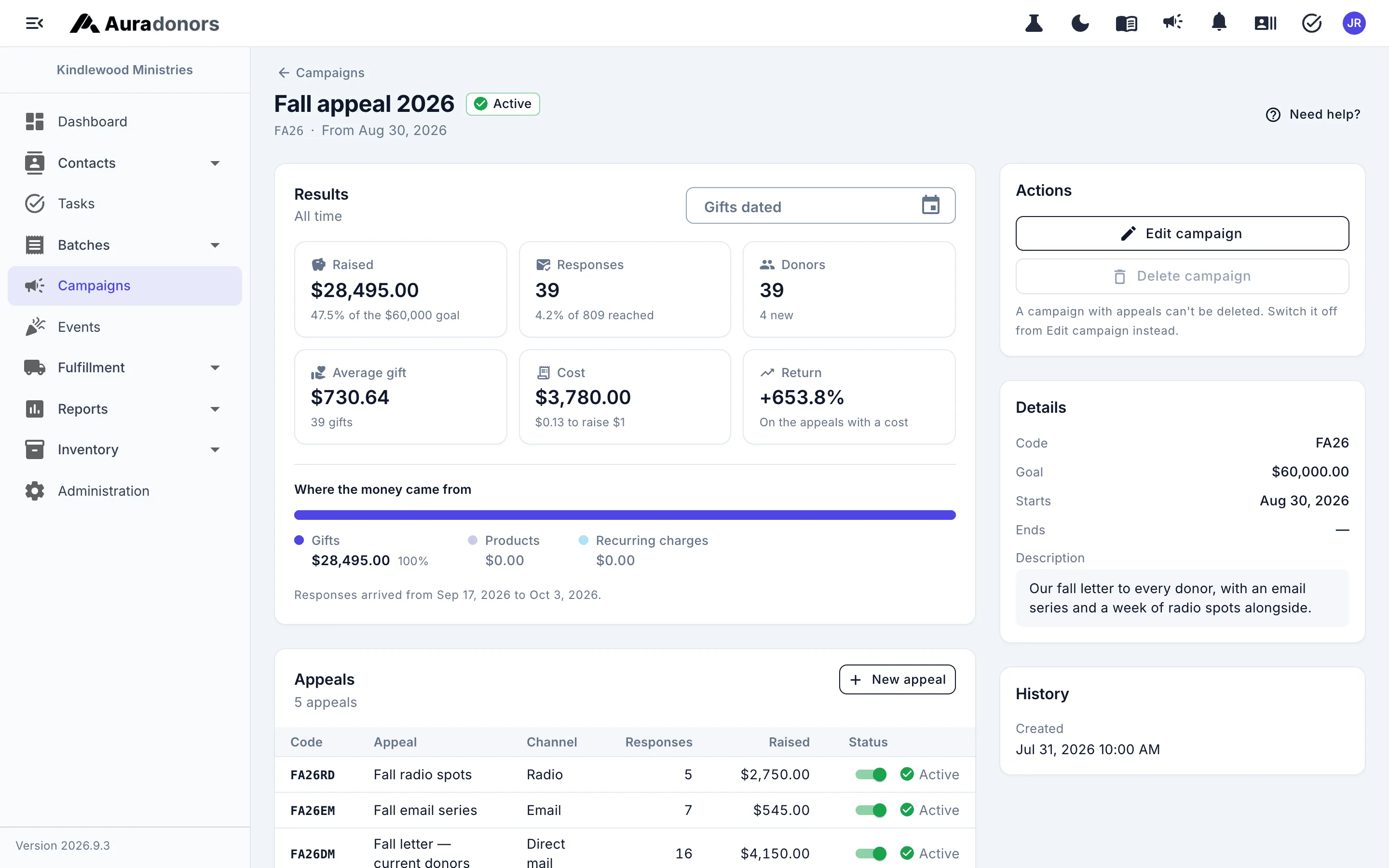
Learn moreKnow what every appeal raised — and what it cost.
Every gift carries the code of the appeal that raised it, from the reply envelope to the radio spot. Build a mailing from your donor file, split it into segments with their own letters and ask amounts, and watch responses, revenue, and return arrive on the campaign page.
- Appeal source codes on every gift and recurring charge
- Mailings with segments, household pieces, labels, mail-house files, and merged letters
- Responses, revenue, new donors, cost, and return on every appeal
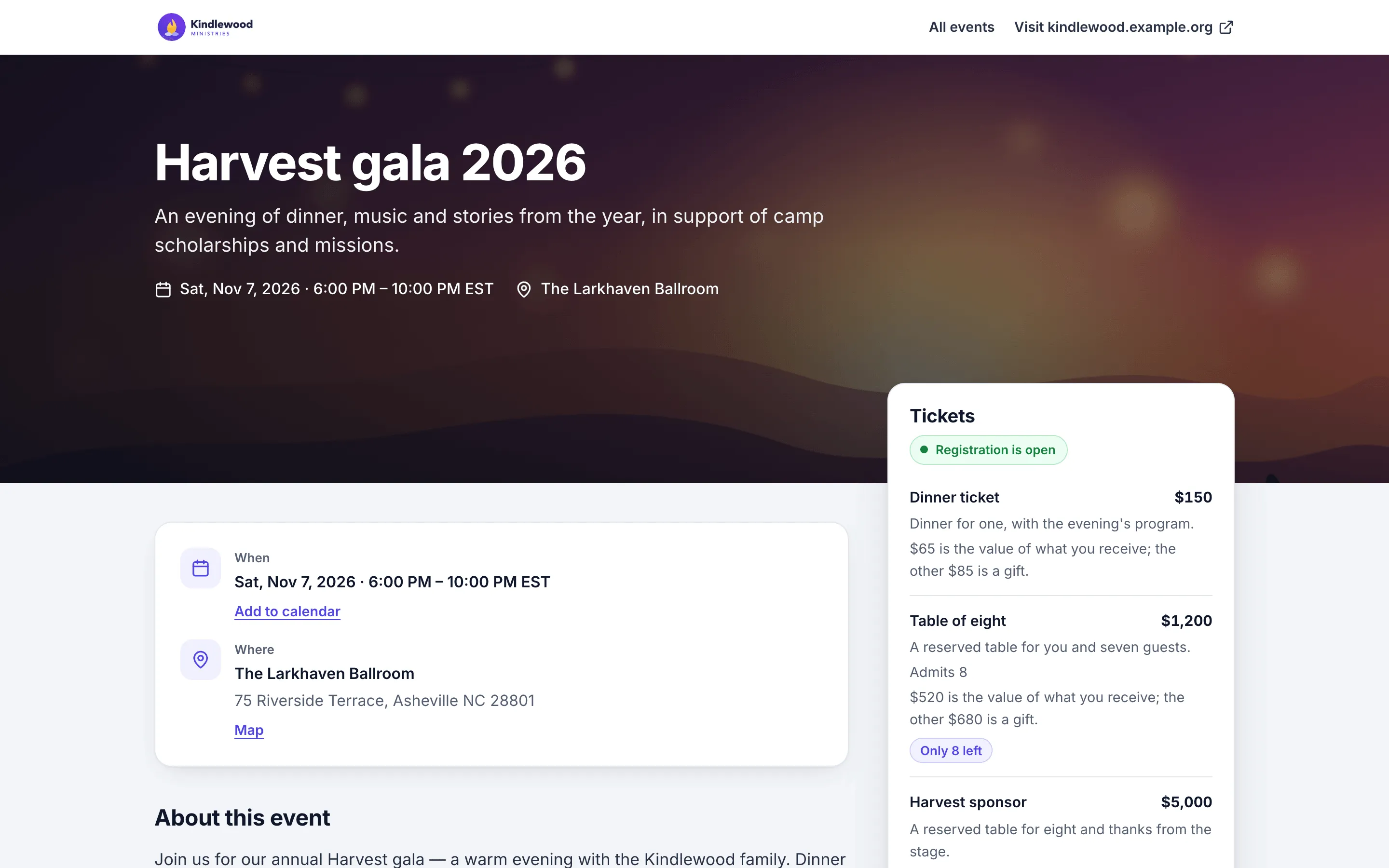
Every guest and every dollar on the donor record.
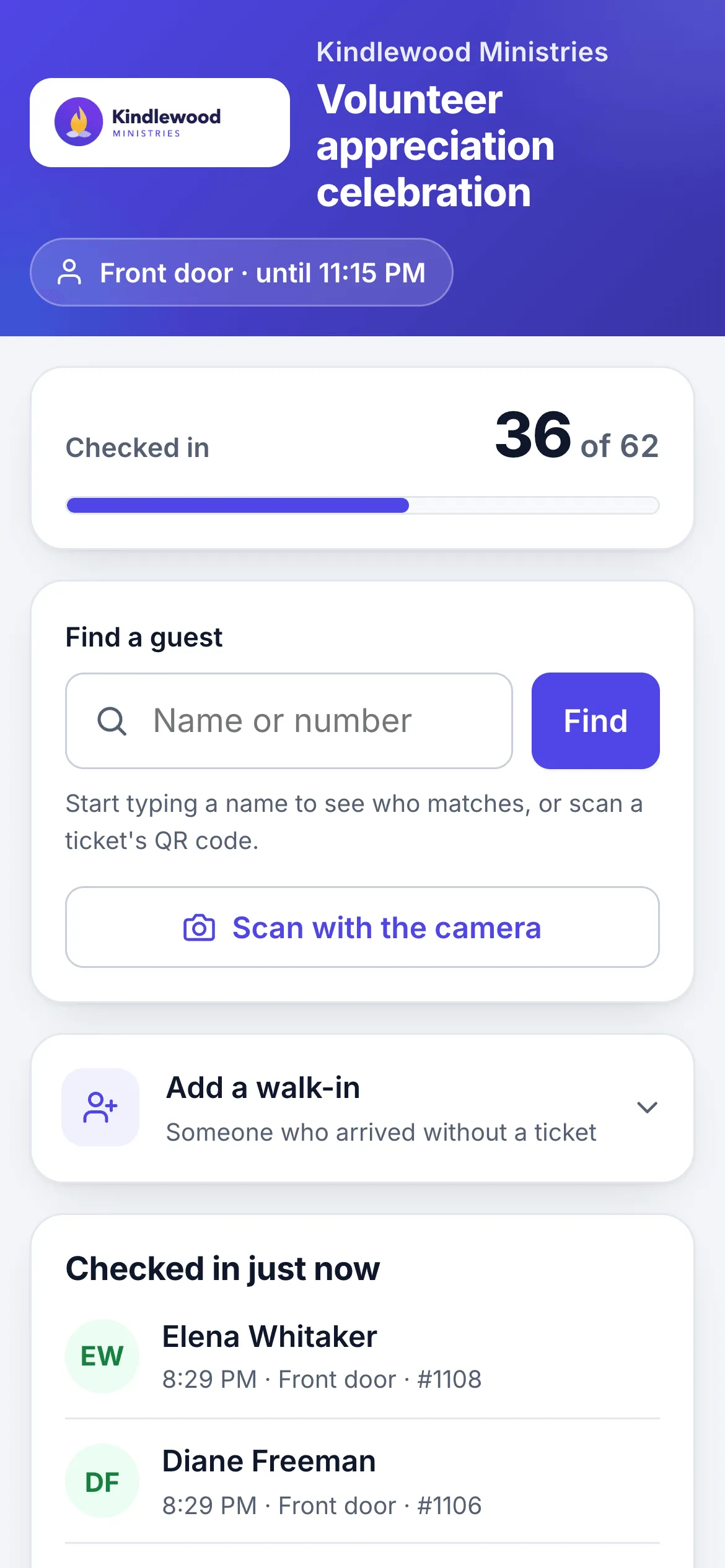
Sell tickets, tables, and sponsorships on a registration page in your colors, take phone registrations at the box office, and check guests in from any phone — with the gift part of each ticket recorded and disclosed correctly.
- Registration pages you can place on your own website
- Tables, sponsorships, waitlists, and seating
- Check-in by QR code from any phone, including volunteer links
See who is slipping away while there is still time to call.
Lapse-risk and engagement scores on every donor, measured against their own giving rhythm and shown with their working — so your team trusts them enough to pick up the phone.
- Scores on every contact, list, report, and saved segment
- A donors-at-risk view for the development team
- Automations that create a task when a donor moves into high risk
Why spreadsheets and legacy CRMs stop working.
The tools that got you here cannot take you further. Here is where they break down.
Donor context disappears when staff turn over
If relationship history lives in someone's inbox or personal notes, it leaves when they do. Your next hire starts from zero with donors who expect continuity.
Follow-up depends on individual discipline, not a system
Without assigned tasks, deadlines, and reminders, donor follow-up happens when someone remembers — which means it often does not happen at all.
Leadership is always one report away from knowing what is happening
When data lives in separate systems, every question from the board triggers a multi-day data collection project instead of a 30-second lookup.
What changes when your team runs on one system.
Before Auradonors
- Three systems passing donors between them
- Mail lists fixed in a spreadsheet and emailed to the mail house
- Event guests on a separate list nobody reconciles
- Thank-yous tracked by inbox and memory
- Reports rebuilt by hand every quarter
After Auradonors
- One donor and household record everyone trusts
- Mailings built from the donor file, every reply keyed to its appeal
- Every guest and ticket on the donor record
- Receipts sent by your rules, follow-up owned and tracked
- Board-ready reports available on demand
Plans from $399 a month. Unlimited users. Unlimited donor records.
No per-record pricing, no revenue-based billing, no per-seat fees, and no charge for each module you add. Your price stays your price as your donor file grows.
15 years working inside nonprofit operations. This platform is the result.
Auradonors was not designed in a vacuum. It was built from 15 years of hands-on work with large ministries and donor-funded organizations — watching firsthand where manual processes break down, where staff waste hours on coordination, and where donors fall through the cracks.
Every feature in this platform exists because we saw a real operational failure that needed a systematic solution. Appeal codes ride on every gift because no one could say what a mailing returned. The task engine exists because follow-ups were being missed. The audit trail exists because leadership needed accountability. The reporting suite exists because board questions were taking days to answer.
This is not a generic CRM adapted for nonprofits. It is purpose-built infrastructure for organizations that take fundraising operations seriously.
Works with the services you already use
Payment processing, shipping, email lists, address checks, and sales tax — connected, not re-keyed.

Stripe
Card and bank payments

Authorize.Net
Card and bank payments

ShipStation
Shipping labels and live rates

Mailchimp
Email list sync

Smarty
US and international address checks

Avalara
Sales-tax calculation
Your team deserves infrastructure that matches their effort.
Schedule a 30-minute conversation. We will walk through your current operations and show you exactly where Auradonors would change the way your team works.